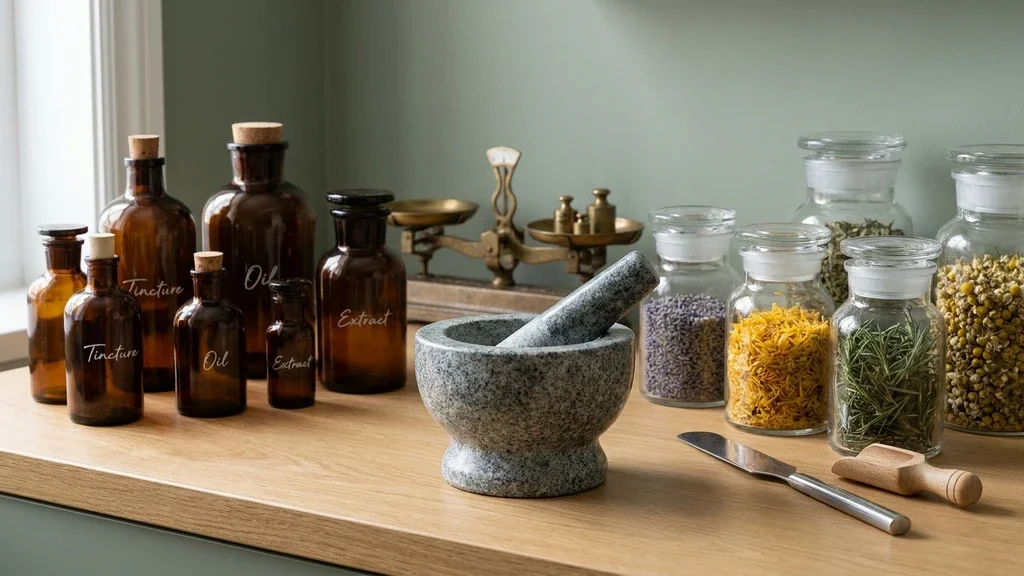
A clinical herbalist is a trained herbal practitioner who works one-on-one with clients, taking a full health history and building individualized herbal plans. It is the most advanced and most hands-on path in Western herbalism, and also the most misunderstood. In this guide you will learn what a clinical herbalist actually does, how the role differs from a “master herbalist” or a Registered Herbalist, what the training looks like, how long it takes and what clinical herbalists realistically earn.
If you are just starting out, read our overview of how to become an herbalist first. This article goes deeper into the clinical path specifically.
What Is a Clinical Herbalist?
A clinical herbalist uses medicinal plants in a structured, client-centred practice. Instead of recommending a single herb for a single complaint, they look at the whole person: health history, diet, sleep, stress, medications and constitution. From that picture they design a custom formula, usually a blend of several herbs, together with diet and lifestyle suggestions, and then follow up to adjust the plan over time.
Many clinical herbalists also work alongside doctors, nutritionists, acupuncturists or naturopaths. Good practitioners know when a concern is outside their scope and refer clients to medical care.
Clinical Herbalist vs Other Herbalist Titles
Herbal titles can be confusing because most of them are not regulated. Here is how the common ones compare:
| Title | Typical training | Main focus |
|---|---|---|
| Family or community herbalist | Weeks to about one year | Home remedies and everyday wellness for family and community |
| Master herbalist | A school diploma, often one to two years | Broad herbal knowledge; the title is set by each school, not by a standards body |
| Clinical herbalist | Two to four years, including supervised clinical hours | One-on-one consultations and individualized formulas |
| Registered Herbalist (RH, AHG) | Around 800 study hours plus about 400 clinical hours, then peer review | Professional designation for experienced clinical herbalists |
| Medical herbalist (UK) | A three-year degree with supervised clinic hours | Clinical practice under UK professional bodies |
The key difference is supervised clinical experience. A family herbalist or a master herbalist diploma can give you excellent plant knowledge, but a clinical herbalist has also practised assessment, formulation and follow-up with real clients under supervision.
What Does a Clinical Herbalist Do?
A typical client relationship looks like this:
- Intake consultation. A long first session (often 60 to 90 minutes) covering health history, current symptoms, medications and supplements, diet, sleep, stress and goals.
- Assessment. Reviewing body systems and, depending on the tradition, constitution or energetics. Some herbalists also review lab results the client already has from their doctor.
- Safety check. Screening for herb-drug interactions, pregnancy, allergies and conditions that need medical referral.
- Custom formula. Usually a blend of three to nine herbs prepared as a tincture, tea, powder or capsule. (Learn the basics of making herbal tinctures to see how many clinical formulas are prepared.)
- Lifestyle and diet guidance. Practical changes that support the formula.
- Follow-up visits. Shorter sessions every few weeks to track progress and adjust the plan.
Common areas clinical herbalists support include digestion, stress and sleep, women’s health, skin and seasonal immunity. For a feel of the materia medica involved, see our guides to herbs for stress, anxiety and sleep and herbs that support gut health.
Is a Clinical Herbalist Licensed?
In the United States, no. There is no federal or state licence for herbalists, so clinical herbalists practise as unlicensed practitioners. In practice that means they cannot diagnose or claim to treat diseases, and they should not tell clients to stop prescribed medication. They can educate, offer herbal and lifestyle recommendations and work alongside licensed healthcare providers.
Rules differ by country. In the UK, for example, medical herbalists usually complete a degree with supervised clinic hours and join a professional association. Always check the regulations where you plan to practise.
Clinical Herbalist Certification and the AHG Registered Herbalist
Because there is no government licence, the most widely recognised professional credential for clinical herbalists in North America is the Registered Herbalist (RH) designation from the American Herbalists Guild (AHG). It is not a licence, but it shows peers and clients that you meet a published standard. According to AHG’s guidelines, applicants need:
- Roughly 800 hours of herbal education (formal programs, independent study or both)
- About 400 hours of clinical experience, gained through independent practice, mentorship or a school clinic
- No more than about 100 of those hours as supervised observation where you are not the primary practitioner
- Documented case histories and professional references, which are then peer reviewed
Most herbal schools award their own “clinical herbalist certificate” when you finish their program. Choose a program whose hours count toward the AHG requirements so your training builds toward the RH designation.
How to Become a Clinical Herbalist in 6 Steps
1. Build a strong foundation
Start with plant identification, herbal actions, safety and basic preparations. Our herbal medicine for beginners guide is a good starting point, and a structured foundational course will speed things up.
2. Make and use your own remedies
Hands-on experience with teas, tinctures, oils and salves teaches you how herbs taste, act and combine. Many students begin by building a home apothecary.
3. Study the sciences behind the practice
Clinical work needs anatomy, physiology, pathophysiology, pharmacology and herb-drug interactions. These subjects separate a clinical herbalist from a home herbalist.
4. Enrol in a clinical herbalism program
Look for programs of two to four years that include case studies and a student clinic. Options range from independent herbal schools to a university degree: for example, the M.S. in Clinical Herbal Medicine offered online by Maryland University of Integrative Health is designed to meet AHG’s educational requirements and part of the clinical hours. Compare formats in our roundup of herbalism classes online.
5. Log supervised clinical hours
Work in a school clinic or with an experienced mentor, keeping detailed, confidential records of every consultation and follow-up. These records are what you will submit to AHG later.
6. Apply for RH status and keep learning
Once you meet the hours, apply to AHG for Registered Herbalist status. After that, continuing education, peer case reviews and new research keep your practice safe and current.
How Long Does It Take to Become a Clinical Herbalist?
- Foundations: 6 to 12 months
- Clinical training program: 2 to 4 years, part-time for most students
- Reaching about 400 clinical hours: often 1 to 2 more years of practice or mentorship
In total, most people need around three to five years to go from beginner to an experienced clinical herbalist ready to apply for RH status.
Clinical Herbalist Salary
There is no official government salary figure for herbalists, so estimates vary widely:
- Salary.com put the average US herbalist salary at about $62,000 a year in 2025, with most earning roughly $42,000 to $90,000.
- Consultation fees for clinical herbalists in private practice commonly fall between $50 and $100 or more per hour, depending on location and experience.
- Lower hourly averages reported for “herbalist” jobs usually reflect retail or shop roles, not clinical practice.
Most clinical herbalists are self-employed, so income depends on client numbers and on additional income streams such as teaching, writing, formulating products or working in an integrative clinic.
Is Clinical Herbalism a Good Career?
Pros: meaningful one-on-one work, flexible hours, the ability to combine practice with teaching or product making, and growing interest in integrative health.
Cons: long training, no licence or insurance reimbursement in the US, and the need to build a client base and business skills yourself.
If you love working with people as well as plants, and you enjoy the science, it can be a deeply rewarding path. If you mainly enjoy growing, making or teaching, other herbalist career paths may suit you better.
Frequently Asked Questions
What is the difference between a clinical herbalist and a master herbalist?
“Master herbalist” is a diploma title set by individual schools and usually focuses on broad herbal knowledge. “Clinical herbalist” refers to someone trained, with supervised clinical hours, to work one-on-one with clients.
Can a clinical herbalist prescribe medication?
No. Herbalists cannot prescribe pharmaceutical drugs, and in the US they cannot diagnose or claim to treat disease. They recommend herbs, diet and lifestyle changes and refer to doctors when needed.
Can I become a clinical herbalist online?
Much of the theory can be studied online, including some university programs. However, the clinical hours must be done with real clients, through a school clinic, mentorship or your own supervised practice.
Do I need a degree to become a clinical herbalist?
No degree is legally required in the US. Many respected clinical herbalists trained at independent herbal schools and then earned the AHG Registered Herbalist designation.
Start Your Path Today
Every clinical herbalist started as a beginner. Explore our herbal medicine index to learn individual herbs, then take the next step with our course, Natural Healing with Herbal Medicine.
This article is for educational purposes only and is not medical advice. Always consult a qualified healthcare provider before using herbs, especially if you are pregnant, nursing or taking medication.





Written by Shir Gutman, clinical herbalist, aromatherapist and founder of Gutman Herbs. Shir trained for three years at the Merav Institute for Alternative Pharmacy and comes from four generations of natural medicine healers.
Last updated: November 18, 2026. This article is for education only and is not a substitute for medical advice. Check with your doctor before using herbs, especially if you are pregnant, breastfeeding, taking medication or have a health condition.
Want to make your own natural remedies?
Learn to prepare tinctures, infused oils, vegan ointments and a natural first aid kit step by step in our online herbalism course with herbalist Shir Gutman.