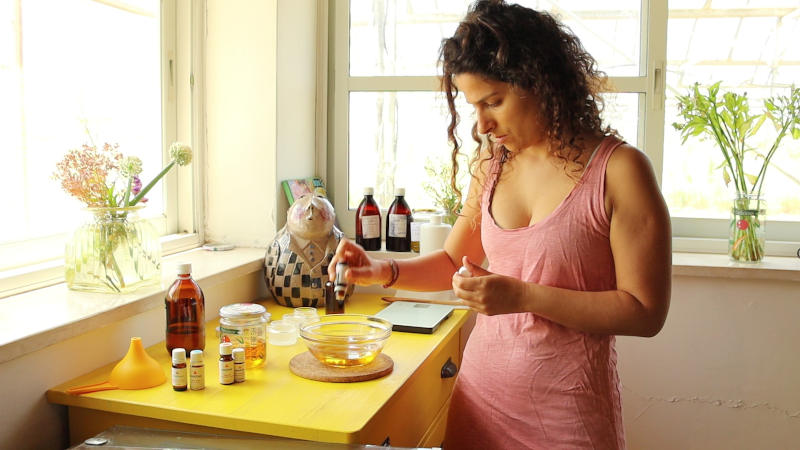
Lavender infused oil is one of the first remedies I teach, because it is simple, safe for most people and incredibly useful. It is the base for soothing balms, massage oils and first aid ointments. Below you will find exactly how to make lavender infused oil at home, using either a gentle warm method or a slow solar method. The same steps work for most dried herbs, so this is also a guide to making infused oils in general.
Infused Oil vs Essential Oil: What Is the Difference?
An infused oil is a carrier oil, such as olive or sunflower oil, that has soaked up the fat-soluble compounds and gentle scent of a herb. You can make it in your kitchen and use it directly on the skin. An essential oil is a highly concentrated aromatic extract, usually made by steam distillation. It needs special equipment and must be diluted before use. Infused oils are milder, safer and much easier for beginners. You can read more about essential oils in what is aromatherapy.
What You Need
- Dried lavender flowers (about 1 cup, or 25 to 30 g). Always use dried flowers: the water in fresh flowers can make the oil go mouldy.
- Carrier oil (about 250 ml / 1 cup). Olive oil is traditional. Sunflower, sweet almond or jojoba oil give a lighter feel.
- A clean, completely dry glass jar with a lid
- A double boiler, or a heatproof bowl over a small pot of water (for the warm method)
- Cheesecloth or a fine strainer
- A dark glass bottle and a label
- Optional: a few drops of vitamin E oil to help the oil stay fresh
Method 1: Warm Infusion (Ready in a Few Hours)
- Put the dried lavender in the top of a double boiler and pour in enough oil to cover the flowers by about 2 to 3 cm (1 inch).
- Heat very gently. The oil should feel warm, not hot. Aim for below about 50 °C (120 °F). It should never bubble or smoke.
- Keep it warm for 2 to 4 hours, stirring now and then. Add a little water to the bottom pot if it runs low.
- Turn off the heat and let it cool slightly.
- Strain through cheesecloth and squeeze the flowers to get every drop out.
- Add vitamin E if you like, pour into a dark glass bottle and label it with the date.
Method 2: Solar or Cold Infusion (2 to 4 Weeks)
- Fill your dry jar about halfway with dried lavender.
- Pour oil over the flowers until they are completely covered, with 2 to 3 cm of oil on top.
- Stir with a clean, dry spoon to release air bubbles, then close the lid.
- Leave the jar in a warm place, such as a sunny windowsill, for 2 to 4 weeks. Shake it gently every few days.
- Strain, bottle and label as above.
The slow method gives a lovely, gentle oil and needs no equipment. The warm method is faster and more reliable in cold or damp weather.
Tips for the Best Infused Oil
- Keep everything dry. Even a drop of water in the jar can lead to mould.
- Keep the herbs covered. Flowers sticking out above the oil can spoil. Top up the oil if needed.
- Use gentle heat. Overheating destroys the delicate compounds and can make the oil smell burnt.
- Trust your nose. Fresh infused oil smells pleasantly herbal. If it smells sour or rancid, throw it away.
How to Use Lavender Infused Oil
- As a relaxing massage oil or after-bath body oil
- As the base for a vegan herbal salve or lip balm
- Gently rubbed on the temples and neck as part of a calming bedtime routine (see essential oils for sleep and relaxation)
- In a natural first aid kit for minor skin irritation (see herbal first aid kit)
Other Herbs You Can Infuse
- Calendula: very gentle and a classic for dry or irritated skin (see uses of calendula)
- Chamomile: soothing and calming
- Rosemary: warming, popular for scalp and massage oils
- St John’s wort: traditionally used for sore muscles and nerves, but it can make skin more sensitive to sunlight
- Arnica: for bruises and sore muscles, external use only and never on broken skin
Shelf Life and Storage
Store infused oil in a dark glass bottle in a cool place, away from sunlight. Most infused oils keep for about 6 to 12 months, depending on how fresh the carrier oil was. Jojoba oil lasts longest.
Safety Notes
- Do a patch test on the inside of your arm before using a new oil on larger areas.
- Lavender is gentle, but some people are sensitive to it. Stop using it if you get a rash or irritation.
- Do not use infused oils on deep wounds, serious burns or infected skin. See a doctor instead.
- If you are pregnant, breastfeeding or using oils on young children, check with a health professional first.
- Garlic infused in oil for cooking carries a botulism risk if stored at room temperature. This guide is for dried herbs used on the skin.
Watch It Step by Step
In my online herbalism course, we make lavender infused oil together on video, then use it as the base for three vegan ointments: a first aid ointment, a balm for muscle aches and a chest rub for the respiratory and immune systems.





Written by Shir Gutman, clinical herbalist, aromatherapist and founder of Gutman Herbs. Shir trained for three years at the Merav Institute for Alternative Pharmacy and comes from four generations of natural medicine healers.

Last updated: October 22, 2026. This article is for education only and is not a substitute for medical advice. Check with your doctor before using herbs, especially if you are pregnant, breastfeeding, taking medication or have a health condition.
Want to make your own natural remedies?
Learn to prepare tinctures, infused oils, vegan ointments and a natural first aid kit step by step in our online herbalism course with herbalist Shir Gutman.