Thinking about turning your love of plants into real skills, or even a career? The first question most people ask is how to get an herbalist certification. The honest answer surprises many beginners: in the United States there is no official licence or state certification for herbalists. What you can earn are certificates of completion from herbal schools and, later on, a professional designation from the American Herbalists Guild. This guide explains what each option really means and lays out a clear path to becoming an herbalist, step by step.
Is There an Official Herbalist Certification?
No. There is currently no certifying agency or licensing board for herbalists in the United States, and clinical herbalists have no federal or state licensure. That means titles such as “Certified Herbalist” or “Master Herbalist” are not official credentials. They are names that individual schools give to their own programs.
What herbal schools actually award is a certificate of completion. It shows you finished a course and learned the material. It is valuable as proof of study, but it is not a licence. Reputable schools say this openly: their certificates do not make you a “certified herbalist” in any legal sense.
Some exceptions exist. Licensed professionals such as naturopathic doctors and acupuncturists who practise Chinese herbal medicine are regulated in many states, but those licences come from their medical training, not from an herbalism certificate. A handful of accredited colleges and universities also offer degrees in herbal medicine.
What Can an Herbalist Legally Do?
In the US you can practise herbalism without a licence and charge for your services. However, herbalists who are not otherwise medically licensed cannot diagnose, prescribe or treat disease. They can educate, recommend specific herbs and dispense them. Making herbal products to sell to the public is more regulated, because products must follow manufacturing and labelling rules. Laws differ in other countries, so always check the rules where you live.
The AHG Registered Herbalist: The Closest Thing to Certification
The American Herbalists Guild (AHG) offers the Registered Herbalist (RH AHG) designation. It does not give any legal rights, but it is the most widely recognised professional standard for clinical herbalists in the US. The main requirements are:
- At least 800 hours of botanical medicine education (formal study, independent study or both)
- At least 400 hours of clinical experience, including 300 hours of direct client contact
- Two letters of recommendation from herbal colleagues
- Assessment of sample cases that shows solid knowledge of materia medica
- AHG membership
The guild updates its criteria from time to time, so check the current requirements on the AHG website before you apply. Most people reach this level after several years of study and supervised practice.
How to Become an Herbalist in 6 Steps
1. Learn the foundations
Start with the basics: how herbs act on the body, the main plant families, and safe use, including contraindications and herb-drug interactions. A short online herbalism course is an easy, low-cost way to see whether herbalism is right for you before committing to a long program.
2. Make your own remedies
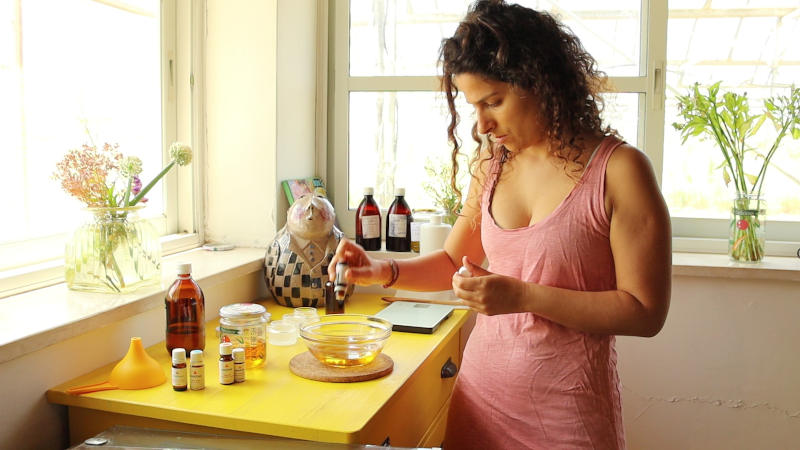
Herbalism is a hands-on craft. Practise the core preparations: water infusions and decoctions, herbal tinctures, infused oils and salves. Making remedies teaches you more about plants than reading alone.
3. Build your materia medica
Get to know 20 to 30 common herbs really well: their actions, uses, dosages and safety notes. Keep a notebook or monograph for each plant. Our herbal medicine index is a good place to start.
4. Choose a deeper training path
Decide what kind of herbalist you want to be. Home and family herbalists may be happy with a few focused courses. Aspiring clinical herbalists usually need a comprehensive program of 1,000 hours or more, plus anatomy, physiology and pathology. Compare options in our guide to herbalism classes online.
5. Gain supervised clinical experience
If you plan to work with clients, look for student clinics, mentorships or apprenticeships. These hours count toward the AHG Registered Herbalist requirements and build real confidence.
6. Keep learning and connect with the community
Join herbal organisations, attend conferences and plant walks, and read widely. Herbalism is a lifelong study.
How Long Does It Take?
- Beginner course: a few hours to a few weeks
- Certificate program: often around 12 months
- Diploma or associate-level program: up to two years
- Clinical herbalist training: usually two to four years, including clinical hours
Career Paths for Herbalists
- Clinical herbalist or herbal consultant in private practice
- Herbal educator, writer or course creator
- Herbal product maker and small-batch brand owner
- Medicinal herb grower or farmer
- Work in herbal pharmacies, natural food stores or herbal product companies
Many successful herbalists combine several of these. For example, they might see clients, teach workshops and sell their own remedies.
Frequently Asked Questions
Do I need a certificate to be an herbalist?
Not legally in the US. A good education and a certificate of completion make you more knowledgeable and more credible, but no certificate is required by law.
Can I become an herbalist online?
Yes. Most of the theory, and much of the medicine making, can be learned online. Hands-on plant identification and clinical work benefit from in-person practice later on.
What is the best first step?
Take a short beginner course and start making simple remedies at home. If you enjoy it, move on to a longer program.
Start Your Herbalism Journey
Our beginner-friendly herbalism course by herbalist Shir Gutman covers medicinal herbs, extraction methods, tinctures, infused oils, vegan ointments and aromatherapy in 50 short video lessons. You get lifetime access and a certificate of completion.
This article is for education only and is not legal or medical advice.
Related posts:




Want to make your own natural remedies?
Learn to prepare tinctures, infused oils, vegan ointments and a natural first aid kit step by step in our herbal medicine course with herbalist Shir Gutman.